
(National Poetry Month, Day 18)
Every year, I feel as though April 18 is something…but I just can’t remember what.
This year, I remembered: the midnight ride of Paul Revere!
The American Revolution seems so distant to me, in both time and space—but it really HAPPENED…and not too far away from where the Graceful Grammarian and many of her friends live.
To bring Paul Revere’s ride to life, walk the Freedom Trail.
In the meantime, enjoy this poem!
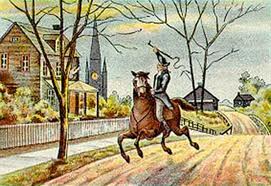
Paul Revere’s Ride
by Henry Wadsworth Longfellow
Listen my children and you shall hear
Of the midnight ride of Paul Revere,
On the eighteenth of April, in Seventy-five;
Hardly a man is now alive
Who remembers that famous day and year.
He said to his friend, “If the British march
By land or sea from the town to-night,
Hang a lantern aloft in the belfry arch
Of the North Church tower as a signal light,–
One if by land, and two if by sea;
And I on the opposite shore will be,
Ready to ride and spread the alarm
Through every Middlesex village and farm,
For the country folk to be up and to arm.”
Then he said “Good-night!” and with muffled oar
Silently rowed to the Charlestown shore,
Just as the moon rose over the bay,
Where swinging wide at her moorings lay
The Somerset, British man-of-war;
A phantom ship, with each mast and spar
Across the moon like a prison bar,
And a huge black hulk, that was magnified
By its own reflection in the tide.
Meanwhile, his friend through alley and street
Wanders and watches, with eager ears,
Till in the silence around him he hears
The muster of men at the barrack door,
The sound of arms, and the tramp of feet,
And the measured tread of the grenadiers,
Marching down to their boats on the shore.
Then he climbed the tower of the Old North Church,
By the wooden stairs, with stealthy tread,
To the belfry chamber overhead,
And startled the pigeons from their perch
On the sombre rafters, that round him made
Masses and moving shapes of shade,–
By the trembling ladder, steep and tall,
To the highest window in the wall,
Where he paused to listen and look down
A moment on the roofs of the town
And the moonlight flowing over all.
Beneath, in the churchyard, lay the dead,
In their night encampment on the hill,
Wrapped in silence so deep and still
That he could hear, like a sentinel’s tread,
The watchful night-wind, as it went
Creeping along from tent to tent,
And seeming to whisper, “All is well!”
A moment only he feels the spell
Of the place and the hour, and the secret dread
Of the lonely belfry and the dead;
For suddenly all his thoughts are bent
On a shadowy something far away,
Where the river widens to meet the bay,–
A line of black that bends and floats
On the rising tide like a bridge of boats.
Meanwhile, impatient to mount and ride,
Booted and spurred, with a heavy stride
On the opposite shore walked Paul Revere.
Now he patted his horse’s side,
Now he gazed at the landscape far and near,
Then, impetuous, stamped the earth,
And turned and tightened his saddle girth;
But mostly he watched with eager search
The belfry tower of the Old North Church,
As it rose above the graves on the hill,
Lonely and spectral and sombre and still.
And lo! as he looks, on the belfry’s height
A glimmer, and then a gleam of light!
He springs to the saddle, the bridle he turns,
But lingers and gazes, till full on his sight
A second lamp in the belfry burns.
A hurry of hoofs in a village street,
A shape in the moonlight, a bulk in the dark,
And beneath, from the pebbles, in passing, a spark
Struck out by a steed flying fearless and fleet;
That was all! And yet, through the gloom and the light,
The fate of a nation was riding that night;
And the spark struck out by that steed, in his flight,
Kindled the land into flame with its heat.
He has left the village and mounted the steep,
And beneath him, tranquil and broad and deep,
Is the Mystic, meeting the ocean tides;
And under the alders that skirt its edge,
Now soft on the sand, now loud on the ledge,
Is heard the tramp of his steed as he rides.
It was twelve by the village clock
When he crossed the bridge into Medford town.
He heard the crowing of the cock,
And the barking of the farmer’s dog,
And felt the damp of the river fog,
That rises after the sun goes down.
It was one by the village clock,
When he galloped into Lexington.
He saw the gilded weathercock
Swim in the moonlight as he passed,
And the meeting-house windows, black and bare,
Gaze at him with a spectral glare,
As if they already stood aghast
At the bloody work they would look upon.
It was two by the village clock,
When he came to the bridge in Concord town.
He heard the bleating of the flock,
And the twitter of birds among the trees,
And felt the breath of the morning breeze
Blowing over the meadow brown.
And one was safe and asleep in his bed
Who at the bridge would be first to fall,
Who that day would be lying dead,
Pierced by a British musket ball.
You know the rest. In the books you have read
How the British Regulars fired and fled,—
How the farmers gave them ball for ball,
> From behind each fence and farmyard wall,
Chasing the redcoats down the lane,
Then crossing the fields to emerge again
Under the trees at the turn of the road,
And only pausing to fire and load.
So through the night rode Paul Revere;
And so through the night went his cry of alarm
To every Middlesex village and farm,—
A cry of defiance, and not of fear,
A voice in the darkness, a knock at the door,
And a word that shall echo for evermore!
For, borne on the night-wind of the Past,
Through all our history, to the last,
In the hour of darkness and peril and need,
The people will waken and listen to hear
The hurrying hoof-beats of that steed,
And the midnight message of Paul Revere.
(National Poetry Month, Day 17)

During Holy Week each year, I like to read “I See His Blood Upon the Rose,” a poem by Irish nationalist poet Joseph Mary Plunkett. Plunkett was an eccentric character: a sickly young man who traveled around Dublin in medieval-esque costume. A leader of the Easter Rising in 1916, he was arrested by British troops and married his fiancée Grace Gifford in jail on the night before his execution. Although Plunkett was not the most practical person, his mystical poetry is artistic and provides evidence of his great faith. I’d like to share Plunkett’s “I See His Blood Upon the Rose” with you, and immediately below the poem, you’ll find an adaptation of a short section of my dissertation in which I discuss this poem.
I See His Blood Upon the Rose
by Joseph Mary Plunkett
I see his blood upon the rose
And in the stars the glory of His eyes,
His body gleams amid eternal snows,
His tears fall from the skies.
I see his face in every flower;
The thunder and the singing of the birds
Are but His voice — and carven by His power
Rocks are His written words.
All pathways by His feet are worn,
His strong heart stirs the ever-beating sea,
His crown of thorns is twined with every thorn,
His cross is every tree.
In “I See His Blood Upon the Rose,” Plunkett reveals the holiness latent in the humanity of Christ. In this poem, which is perhaps best-known and most widely anthologized work, is clear evidence of Plunkett’s mystical vision of the nearness of Christ in the natural world. Plunkett ties national aspirations and religious devotion are closely together, creating a seamless effect. In an uncritical 1918 assessment, Peter McBrien wrote of Plunkett: “That flexibility, that combination of strength and sweetness…, that sunlit sense of the nearness of God which irradiates all his work and shone from the man himself, the white-heat intensity of his love of God and man and Ireland, which spelt its winning graciousness over everything he did, all that will bear witness, in the poems he has bequeathed to us, a soul of Spanish steel tempered in icy water” (36). The natural imagery in this poem is evocative, although simple, since it involves multiple senses. The language that the persona uses to describe the admired Christ is very similar to that which could be used in the description of a beloved. Although this poem is about the constant reminders in the natural world of Christ’s Passion, it is not foreboding, but comforting. The constant presence of Christ in nature is a source of solace for the persona.
It seems as though a concluding stanza could be added to the poem in order to provide a sense of closure; perhaps a discussion of the reminders in nature of the Resurrection would round out the poem. Yet Plunkett chooses not to include a stanza of this sort, possibly because he intends the poem to indicate the constant significance of Christ’s sacrifice for man.
And if Christ’s sacrifice is omnipresent, it can be emulated. Beginning the poem with the image of the rose, a symbol for Ireland, Plunkett ties the sacramental nature of this poem to his denominational and national experience. Further, the Passion of Christ is evoked not only in the beauty and power of nature, as in the rose, the stars, snow, rain, flowers, thunder, birds, and rocks, but also in “every thorn” (ln. 11); that is, Christ’s suffering is tied to the suffering of his followers. For someone of Plunkett’s mindset and political bent, this statement has implications for the nationalistic movement, as well as for religious expression.
This poem hinges on the acceptance that God is present and active in the world, and on the assumption that the Incarnation and Resurrection have sanctified the universe. One might explain the permeation of nature by God’s love in this poem by applying a principle that Steven J. Brown, SJ discusses in “Personification”: “it is one thing to think of various separate objects as endowed with personality; it is quite a different thing to see all nature pervaded by one great Presence and Personality, to see it as a manifestation of its Maker” (416). “I See His Blood Upon the Rose,” we see an overall infusion of God in nature, leading not to pantheism but to a reminder of Christian spirituality through what Plunkett considers to be God’s strategic placement of natural symbols, which function as God’s “written words” (ln. 8).
(National Poetry Month, Day 16)
Patrick Kavanagh, a farmer-turned-poet of mid-20th century Ireland, created some really remarkable verse. His poetry has a refreshing quality. It’s unpretentious, exuberant, and earthy; it shows keen awareness of the physical experience of life on earth and of the Divine light that shines through even the most opaque substances. The bifocal view of the earthly and the divine, which I think characterizes much of Irish literature, is exemplified exquisitely in Kavanagh’s poetry.
Is it any wonder that Nobel laureate Seamus Heaney named Kavanagh as one of his strong influences?
You be the judge.
The One
By Patrick Kavanagh
Green, blue, yellow and red – God is down in the swamps and marshes,
Sensational as April and almost incredible the flowering of our catharsis.
A humble scene in a backward place
Where no one important ever looked;
The raving flowers looked up in the face
Of the One and the Endless, the Mind that has baulked
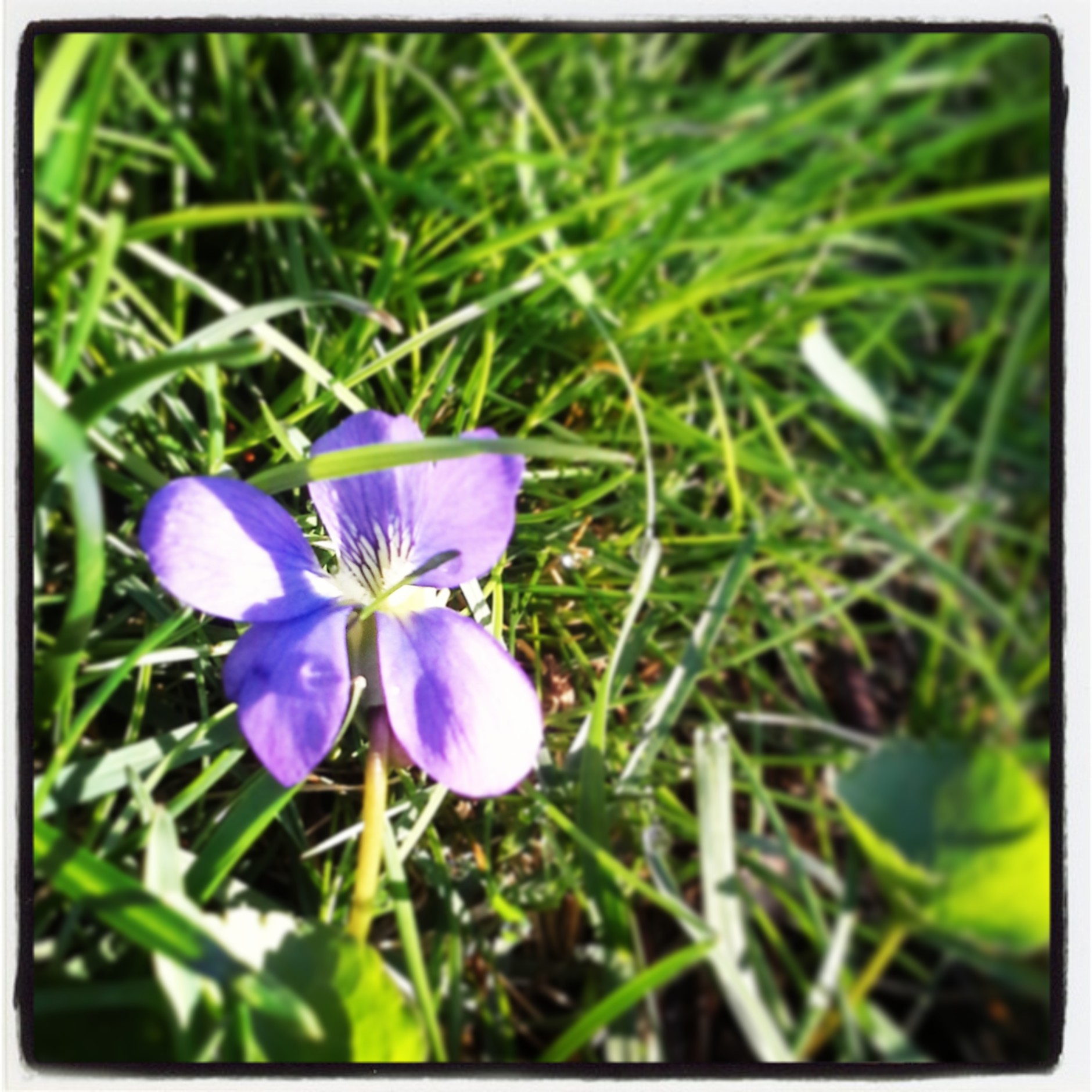
The profoundest of mortals. A primrose, a violet,
A violent wild iris – but mostly anonymous performers,
Yet an important occasion as the Muse at her toilet
Prepared to inform the local farmers
That beautiful, beautiful, beautiful God
Was breathing His love by a cut-away bog.
(National Poetry Month, Day 15)

Today is the 149th anniversary of the death of President Abraham Lincoln, an event noteworthy in itself, and made more significant in American history because of Lincoln’s able and brave management of the tumultuous events of his day.
Lincoln’s very unexpected demise inspired a battery of beautiful poems, some of the most renowned by Walt Whitman.
“When Lilacs Last in the Dooryard Bloom’d,” included below, is, for me, the most personally significant of the Lincoln poems—partially because of its poignancy, and partially because of my personal experience with the poem. My personal experience of “When Lilacs Last in the Dooryard Bloom’d” has little to do with Lincoln himself, but I hope that you won’t mind reading this short, and maybe slightly strange story about why this poem is significant to me.
When I was an eager 18-year-old second-semester freshman at Caldwell College, one of my favorite classes was Images in American Literature, taught by Sr. Brigid. In this course, we read some fascinating and beautiful American literature, most of which relied heavily on the American landscape to create the literature of a new nationality. One beautiful Thursday morning in April, I sat at my desk as class began, and Sr. Brigid asked us to open our textbook to “When Lilacs Last in the Dooryard Bloom’d” by Walt Whitman. Since I was wearing my brand new lilac-colored, long-sleeved, satin-trim ballet-neck t-shirt from the Gap (along with flare jeans and clear jellies flecked with glitter—come on! It was 1998!), I took our reading of this poem as a personal compliment. This poem WOULD BE important. It was directed toward ME. And, as I soon found out, it was.
As we read the elegiac poem together and listened to Sr. Brigid’s explanation, it became clear to my classmates and me that this poem stirringly conveyed a strong message about Lincoln.
As I got out of my ’96 Chevy Beretta in the back of the driveway at home later that afternoon, I began sneezing uncontrollably. And later that night, when I went to bed, the sneezing and began again, accompanied by my eyes turning into waterworks.
The next morning, my mom casually asked if I had noticed that the lilac was blooming. THAT LILAC! THAT WAS IT! I had inexplicably become allergic to the lilac bush that had been growing outside my window for the past 5 years. What was I going to do? Lilacs are so pretty, and I didn’t want to hinder the growth of the bush by asking that we move it to a different location in the yard. So I just kept my bedroom window closed until lilac season was over.
However, we had a repeat allergy performance when I was 19. And again when I was 20. And 21, and 22. All along, while admiring the lilac, I secretly halfway wished that the lilac bush would be struck by lightning.
And it was. No repeat allergies at 23 or beyond.
What’s the moral of this story? I don’t want to sound overly threatening, but I think it’s this: Don’t mess with Maura’s sinuses.
And, without further ado, here’s the poem, which has a much more universal and significant message than does my lilac story. Have a box of tissues handy, in case this produces tears—or allergies.
When Lilacs Last in the Dooryard Bloom’d
by Walt Whitman
1
When lilacs last in the dooryard bloom’d,
And the great star early droop’d in the western sky in the night,
I mourn’d, and yet shall mourn with ever-returning spring.
Ever-returning spring, trinity sure to me you bring,
Lilac blooming perennial and drooping star in the west,
And thought of him I love.
2
O powerful western fallen star!
O shades of night—O moody, tearful night!
O great star disappear’d—O the black murk that hides the star!
O cruel hands that hold me powerless—O helpless soul of me!
O harsh surrounding cloud that will not free my soul.
3
In the dooryard fronting an old farm-house near the white-wash’d palings,
Stands the lilac-bush tall-growing with heart-shaped leaves of rich green,
With many a pointed blossom rising delicate, with the perfume strong I love,
With every leaf a miracle—and from this bush in the dooryard,
With delicate-color’d blossoms and heart-shaped leaves of rich green,
A sprig with its flower I break.
4
In the swamp in secluded recesses,
A shy and hidden bird is warbling a song.
Solitary the thrush,
The hermit withdrawn to himself, avoiding the settlements,
Sings by himself a song.
Song of the bleeding throat,
Death’s outlet song of life, (for well dear brother I know,
If thou wast not granted to sing thou would’st surely die.)
5
Over the breast of the spring, the land, amid cities,
Amid lanes and through old woods, where lately the violets peep’d from the ground, spotting the gray debris,
Amid the grass in the fields each side of the lanes, passing the endless grass,
Passing the yellow-spear’d wheat, every grain from its shroud in the dark-brown fields uprisen,
Passing the apple-tree blows of white and pink in the orchards,
Carrying a corpse to where it shall rest in the grave,
Night and day journeys a coffin.
6
Coffin that passes through lanes and streets,
Through day and night with the great cloud darkening the land,
With the pomp of the inloop’d flags with the cities draped in black,
With the show of the States themselves as of crape-veil’d women standing,
With processions long and winding and the flambeaus of the night,
With the countless torches lit, with the silent sea of faces and the unbared heads,
With the waiting depot, the arriving coffin, and the sombre faces,
With dirges through the night, with the thousand voices rising strong and solemn,
With all the mournful voices of the dirges pour’d around the coffin,
The dim-lit churches and the shuddering organs—where amid these you journey,
With the tolling tolling bells’ perpetual clang,
Here, coffin that slowly passes,
I give you my sprig of lilac.
7
(Nor for you, for one alone,
Blossoms and branches green to coffins all I bring,
For fresh as the morning, thus would I chant a song for you O sane and sacred death.
All over bouquets of roses,
O death, I cover you over with roses and early lilies,
But mostly and now the lilac that blooms the first,
Copious I break, I break the sprigs from the bushes,
With loaded arms I come, pouring for you,
For you and the coffins all of you O death.)
8
O western orb sailing the heaven,
Now I know what you must have meant as a month since I walk’d,
As I walk’d in silence the transparent shadowy night,
As I saw you had something to tell as you bent to me night after night,
As you droop’d from the sky low down as if to my side, (while the other stars all look’d on,)
As we wander’d together the solemn night, (for something I know not what kept me from sleep,)
As the night advanced, and I saw on the rim of the west how full you were of woe,
As I stood on the rising ground in the breeze in the cool transparent night,
As I watch’d where you pass’d and was lost in the netherward black of the night,
As my soul in its trouble dissatisfied sank, as where you sad orb,
Concluded, dropt in the night, and was gone.
9
Sing on there in the swamp,
O singer bashful and tender, I hear your notes, I hear your call,
I hear, I come presently, I understand you,
But a moment I linger, for the lustrous star has detain’d me,
The star my departing comrade holds and detains me.
10
O how shall I warble myself for the dead one there I loved?
And how shall I deck my song for the large sweet soul that has gone?
And what shall my perfume be for the grave of him I love?
Sea-winds blown from east and west,
Blown from the Eastern sea and blown from the Western sea, till there on the prairies meeting,
These and with these and the breath of my chant,
I’ll perfume the grave of him I love.
11
O what shall I hang on the chamber walls?
And what shall the pictures be that I hang on the walls,
To adorn the burial-house of him I love?
Pictures of growing spring and farms and homes,
With the Fourth-month eve at sundown, and the gray smoke lucid and bright,
With floods of the yellow gold of the gorgeous, indolent, sinking sun, burning, expanding the air,
With the fresh sweet herbage under foot, and the pale green leaves of the trees prolific,
In the distance the flowing glaze, the breast of the river, with a wind-dapple here and there,
With ranging hills on the banks, with many a line against the sky, and shadows,
And the city at hand with dwellings so dense, and stacks of chimneys,
And all the scenes of life and the workshops, and the workmen homeward returning.
12
Lo, body and soul—this land,
My own Manhattan with spires, and the sparkling and hurrying tides, and the ships,
The varied and ample land, the South and the North in the light, Ohio’s shores and flashing Missouri,
And ever the far-spreading prairies cover’d with grass and corn.
Lo, the most excellent sun so calm and haughty,
The violet and purple morn with just-felt breezes,
The gentle soft-born measureless light,
The miracle spreading bathing all, the fulfill’d noon,
The coming eve delicious, the welcome night and the stars,
Over my cities shining all, enveloping man and land.
13
Sing on, sing on you gray-brown bird,
Sing from the swamps, the recesses, pour your chant from the bushes,
Limitless out of the dusk, out of the cedars and pines.
Sing on dearest brother, warble your reedy song,
Loud human song, with voice of uttermost woe.
O liquid and free and tender!
O wild and loose to my soul—O wondrous singer!
You only I hear—yet the star holds me, (but will soon depart,)
Yet the lilac with mastering odor holds me.
14
Now while I sat in the day and look’d forth,
In the close of the day with its light and the fields of spring, and the farmers preparing their crops,
In the large unconscious scenery of my land with its lakes and forests,
In the heavenly aerial beauty, (after the perturb’d winds and the storms,)
Under the arching heavens of the afternoon swift passing, and the voices of children and women,
The many-moving sea-tides, and I saw the ships how they sail’d,
And the summer approaching with richness, and the fields all busy with labor,
And the infinite separate houses, how they all went on, each with its meals and minutia of daily usages,
And the streets how their throbbings throbb’d, and the cities pent—lo, then and there,
Falling upon them all and among them all, enveloping me with the rest,
Appear’d the cloud, appear’d the long black trail,
And I knew death, its thought, and the sacred knowledge of death.
Then with the knowledge of death as walking one side of me,
And the thought of death close-walking the other side of me,
And I in the middle as with companions, and as holding the hands of companions,
I fled forth to the hiding receiving night that talks not,
Down to the shores of the water, the path by the swamp in the dimness,
To the solemn shadowy cedars and ghostly pines so still.
And the singer so shy to the rest receiv’d me,
The gray-brown bird I know receiv’d us comrades three,
And he sang the carol of death, and a verse for him I love.
From deep secluded recesses,
From the fragrant cedars and the ghostly pines so still,
Came the carol of the bird.
And the charm of the carol rapt me,
As I held as if by their hands my comrades in the night,
And the voice of my spirit tallied the song of the bird.
Come lovely and soothing death,
Undulate round the world, serenely arriving, arriving,
In the day, in the night, to all, to each,
Sooner or later delicate death.
Prais’d be the fathomless universe,
For life and joy, and for objects and knowledge curious,
And for love, sweet love—but praise! praise! praise!
For the sure-enwinding arms of cool-enfolding death.
Dark mother always gliding near with soft feet,
Have none chanted for thee a chant of fullest welcome?
Then I chant it for thee, I glorify thee above all,
I bring thee a song that when thou must indeed come, come unfalteringly.
Approach strong deliveress,
When it is so, when thou hast taken them I joyously sing the dead,
Lost in the loving floating ocean of thee,
Laved in the flood of thy bliss O death.
From me to thee glad serenades,
Dances for thee I propose saluting thee, adornments and feastings for thee,
And the sights of the open landscape and the high-spread sky are fitting,
And life and the fields, and the huge and thoughtful night.
The night in silence under many a star,
The ocean shore and the husky whispering wave whose voice I know,
And the soul turning to thee O vast and well-veil’d death,
And the body gratefully nestling close to thee.
Over the tree-tops I float thee a song,
Over the rising and sinking waves, over the myriad fields and the prairies wide,
Over the dense-pack’d cities all and the teeming wharves and ways,
I float this carol with joy, with joy to thee O death.
15
To the tally of my soul,
Loud and strong kept up the gray-brown bird,
With pure deliberate notes spreading filling the night.
Loud in the pines and cedars dim,
Clear in the freshness moist and the swamp-perfume,
And I with my comrades there in the night.
While my sight that was bound in my eyes unclosed,
As to long panoramas of visions.
And I saw askant the armies,
I saw as in noiseless dreams hundreds of battle-flags,
Borne through the smoke of the battles and pierc’d with missiles I saw them,
And carried hither and yon through the smoke, and torn and bloody,
And at last but a few shreds left on the staffs, (and all in silence,)
And the staffs all splinter’d and broken.
I saw battle-corpses, myriads of them,
And the white skeletons of young men, I saw them,
I saw the debris and debris of all the slain soldiers of the war,
But I saw they were not as was thought,
They themselves were fully at rest, they suffer’d not,
The living remain’d and suffer’d, the mother suffer’d,
And the wife and the child and the musing comrade suffer’d,
And the armies that remain’d suffer’d.
16
Passing the visions, passing the night,
Passing, unloosing the hold of my comrades’ hands,
Passing the song of the hermit bird and the tallying song of my soul,
Victorious song, death’s outlet song, yet varying ever-altering song,
As low and wailing, yet clear the notes, rising and falling, flooding the night,
Sadly sinking and fainting, as warning and warning, and yet again bursting with joy,
Covering the earth and filling the spread of the heaven,
As that powerful psalm in the night I heard from recesses,
Passing, I leave thee lilac with heart-shaped leaves,
I leave thee there in the door-yard, blooming, returning with spring.
I cease from my song for thee,
From my gaze on thee in the west, fronting the west, communing with thee,
O comrade lustrous with silver face in the night.
Yet each to keep and all, retrievements out of the night,
The song, the wondrous chant of the gray-brown bird,
And the tallying chant, the echo arous’d in my soul,
With the lustrous and drooping star with the countenance full of woe,
With the holders holding my hand nearing the call of the bird,
Comrades mine and I in the midst, and their memory ever to keep, for the dead I loved so well,
For the sweetest, wisest soul of all my days and lands—and this for his dear sake,
Lilac and star and bird twined with the chant of my soul,
There in the fragrant pines and the cedars dusk and dim.
(National Poetry Month, Day 14)
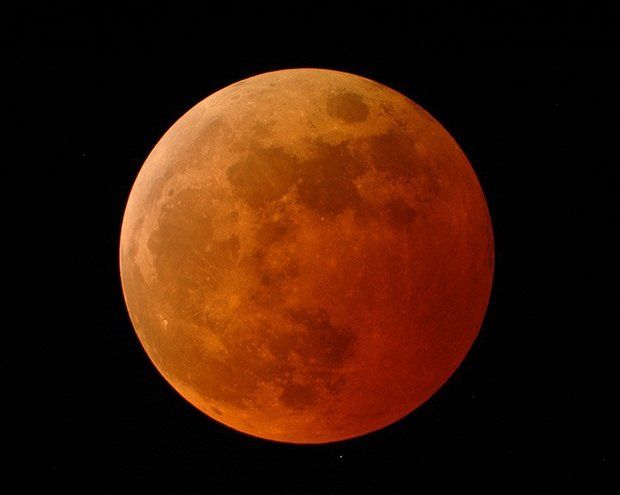
Upon wanting to go outside to catch a glimpse of the lunar eclipse, but realizing that I have many, many papers to grade, and it’s already 11:10pm, I am reminded of a poem that my sister and I memorized as children, because our father recited it so often.
Stopping By Woods on a Snowy Evening
by Robert Frost
Whose woods these are I think I know.
His house is in the village though;
He will not see me stopping here
To watch his woods fill up with snow.
My little horse must think it queer
To stop without a farmhouse near
Between the woods and frozen lake
The darkest evening of the year.
He gives his harness bells a shake
To ask if there is some mistake.
The only other sound’s the sweep
Of easy wind and downy flake.
The woods are lovely, dark and deep.
But I have promises to keep,
And miles to go before I sleep,
And miles to go before I sleep.
(National Poetry Month, Day 13)
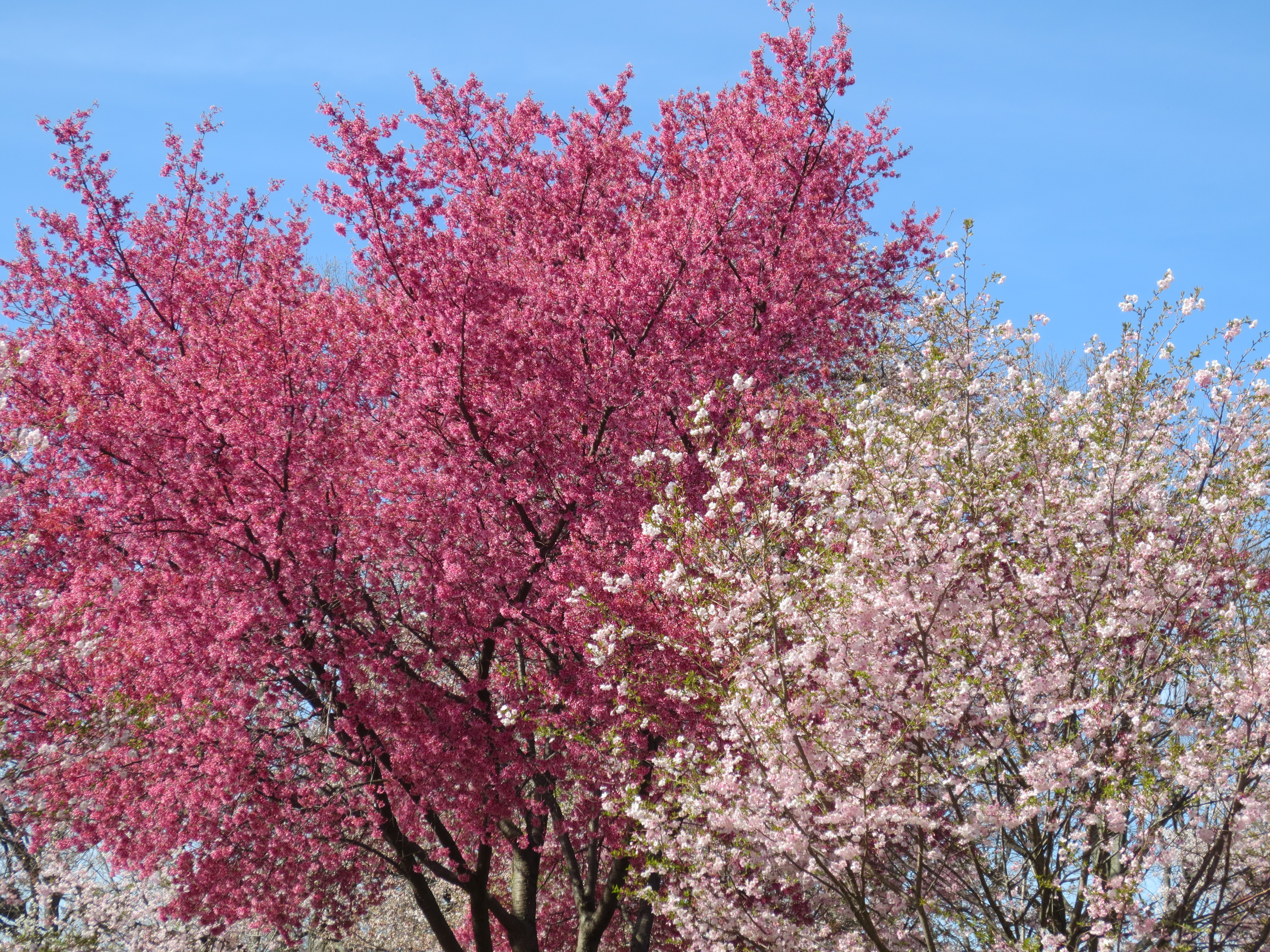
Branch Brook Park, 2013
Did you know that the largest collection of cherry blossom trees in the United States is at Branch Brook Park in Newark, New Jersey?
While the cherry blossoms have just barely begun blooming at Branch Brook, the events of the annual Cherry Blossom Festival are practically all over.
While we wait for the blossoms to flourish fully in the next few days, I invite you to peruse these photos that I’ve taken of the Branch Brook cherry blossoms in recent years, and to enjoy my favorite cherry blossom poem.
Loveliest of Trees
by A. E. Housman
Loveliest of trees, the cherry now
Is hung with bloom along the bough,
And stands about the woodland ride
Wearing white for Eastertide.
Now, of my threescore years and ten,
Twenty will not come again,
And take from seventy springs a score,
It only leaves me fifty more.
And since to look at things in bloom
Fifty springs are little room,
About the woodlands I will go
To see the cherry hung with snow.
(National Poetry Month, Day 12)
One more poem about writing. Billy Collins’ “Sonnet”—he says it, and he means it. Very clever!
All we need is fourteen lines, well, thirteen now,
and after this one just a dozen
to launch a little ship on love’s storm-tossed seas,
then only ten more left like rows of beans.
How easily it goes unless you get Elizabethan
and insist the iambic bongos must be played
and rhymes positioned at the ends of lines,
one for every station of the cross.
But hang on here while we make the turn
into the final six where all will be resolved,
where longing and heartache will find an end,
where Laura will tell Petrarch to put down his pen,
take off those crazy medieval tights,
blow out the lights, and come at last to bed.
(National Poetry Month, Day 11)
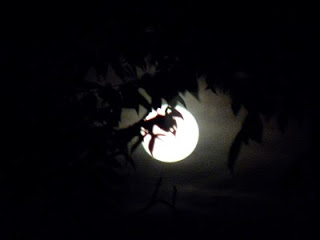
As we continue to enjoy some poems about language and writing, let’s read a poem about poetry. I guess we could call it a meta-poem.
I admire Archibald MacLeish’s ability to conjure up a series of multi-sensory images, unrelated though they may seem, to convey the message that poetry is primarily meant to be appreciated, not analyzed. To me, as an English teacher, this idea is paradoxically both revolutionary and part of conventional wisdom. While I love to appreciate beautiful things, I also have a tendency to analyze and over-analyze.
What if I just appreciate the poem and analyze only my response to it? Maybe that’s what I’ll try.
Ars Poetica
by Archibald MacLeish
A poem should be palpable and mute
As a globed fruit,
Dumb
As old medallions to the thumb,
Silent as the sleeve-worn stone
Of casement ledges where the moss has grown—
A poem should be wordless
As the flight of birds.
*
A poem should be motionless in time
As the moon climbs,
Leaving, as the moon releases
Twig by twig the night-entangled trees,
Leaving, as the moon behind the winter leaves,
Memory by memory the mind—
A poem should be motionless in time
As the moon climbs.
*
A poem should be equal to:
Not true.
For all the history of grief
An empty doorway and a maple leaf.
For love
The leaning grasses and two lights above the sea—
A poem should not mean
But be.
(National Poetry Month, Day 10)

Writing can be hard work, but its rewards are great—this can be said of many other types of work, too. “Digging” is one of my favorite Seamus Heaney poems. It covers gardening, potatoes, turf-cutting, family traditions, and time travel; what’s not to love? The best thing about this poem, in my opinion, is that we can actually hear the shovel and the turf-cutter going into the ground, and we can see, smell, and feel the ground these implements open. Reading “Digging” “awaken[s] in my head” consciousness of the “living roots” that have informed my own ideas about work and about writing.
The concept of writing as an archaeological act informs much of Heaney’s poetry, and this poem is a good entry-point for Heaney’s “bog poems,” which explore the individual’s, Ireland’s, and the world’s past.
Join me on this short trip back in time, through layers of gravelly, then root-laden and waterlogged soil, straight into our collective unconscious and our day-to-day present.
Digging
by Seamus Heaney
Between my finger and my thumb
The squat pen rests; snug as a gun.
Under my window, a clean rasping sound
When the spade sinks into gravelly ground:
My father, digging. I look down
Till his straining rump among the flowerbeds
Bends low, comes up twenty years away
Stooping in rhythm through potato drills
Where he was digging.
The coarse boot nestled on the lug, the shaft
Against the inside knee was levered firmly.
He rooted out tall tops, buried the bright edge deep
To scatter new potatoes that we picked,
Loving their cool hardness in our hands.
By God, the old man could handle a spade.
Just like his old man.
My grandfather cut more turf in a day
Than any other man on Toner’s bog.
Once I carried him milk in a bottle
Corked sloppily with paper. He straightened up
To drink it, then fell to right away
Nicking and slicing neatly, heaving sods
Over his shoulder, going down and down
For the good turf. Digging.
The cold smell of potato mould, the squelch and slap
Of soggy peat, the curt cuts of an edge
Through living roots awaken in my head.
But I’ve no spade to follow men like them.
Between my finger and my thumb
The squat pen rests.
I’ll dig with it.
P.S. To see and hear some turf cutting, click here.
(National Poetry Month, Day 9)
Imagine that you are a second-semester English course in college. Your professor distributes a sheet with the printed assignment for the first paper you’ll write in the course. You expect to be told the length restrictions, format requirements, subject of the paper, and more. With eager anticipation, and perhaps a little bit of dread, you begin to read the assignment.
But you might as well not bother to read the assignment, because it basically just says “write something.”
What do you do?
If I were in this position, I probably would simply cry.
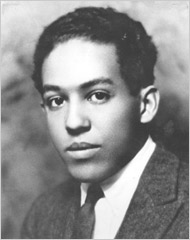
However, this is not what the persona in Langston Hughes’ “Theme for English B” does.
Think of the ingenuity—and perhaps even impudence—required to fulfill the assignment in the form of the poem that the persona produces.
Yet, what results is certainly true, and it’s probably much truer than the professor would like to admit.
So, here we have it: the power of writing (specifically, the power of poetry) to express truths that are difficult to accept, and sometimes even difficult to recognize.
Theme for English B
by Langston Hughes
The instructor said,
Go home and write
a page tonight.
And let that page come out of you—
Then, it will be true.
I wonder if it’s that simple?
I am twenty-two, colored, born in Winston-Salem.
I went to school there, then Durham, then here
to this college on the hill above Harlem.
I am the only colored student in my class.
The steps from the hill lead down into Harlem
through a park, then I cross St. Nicholas,
Eighth Avenue, Seventh, and I come to the Y,
the Harlem Branch Y, where I take the elevator
up to my room, sit down, and write this page:
It’s not easy to know what is true for you or me
at twenty-two, my age. But I guess I’m what
I feel and see and hear, Harlem, I hear you:
hear you, hear me—we two—you, me, talk on this page.
(I hear New York too.) Me—who?
Well, I like to eat, sleep, drink, and be in love.
I like to work, read, learn, and understand life.
I like a pipe for a Christmas present,
or records—Bessie, bop, or Bach.
I guess being colored doesn’t make me NOT like
the same things other folks like who are other races.
So will my page be colored that I write?
Being me, it will not be white.
But it will be
a part of you, instructor.
You are white—
yet a part of me, as I am a part of you.
That’s American.
Sometimes perhaps you don’t want to be a part of me.
Nor do I often want to be a part of you.
But we are, that’s true!
As I learn from you,
I guess you learn from me—
although you’re older—and white—
and somewhat more free.
This is my page for English B.
(National Poetry Month, Day 8)
For the next few days of National Poetry Month, let’s explore some poems about language and writing. First on the docket:
Languages
by Carl Sandburg
There are no handles upon a language
Whereby men take hold of it
And mark it with signs for its remembrance.
It is a river, this language,
Once in a thousand years
Breaking a new course
Changing its way to the ocean.
It is mountain effluvia
Moving to valleys
And from nation to nation
Crossing borders and mixing.
Languages die like rivers.
Words wrapped round your tongue today
And broken to shape of thought
Between your teeth and lips speaking
Now and today
Shall be faded hieroglyphics
Ten thousand years from now.
Sing—and singing—remember
Your song dies and changes
And is not here to-morrow
Any more than the wind
Blowing ten thousand years ago.
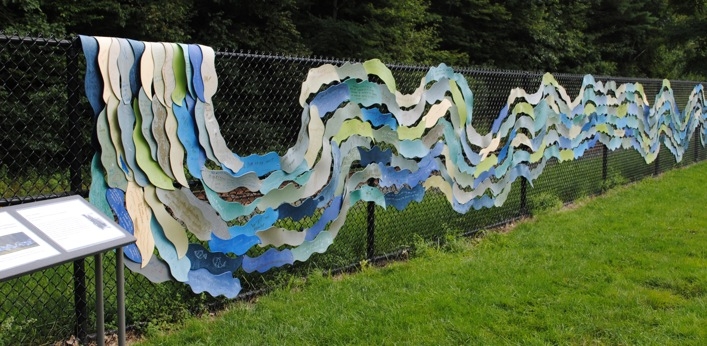
Stream of Conscience: River of Words, art project
(National Poetry Month, Day 7)
Yesterday was such a beautiful day in New Jersey, and although today is not quite as brilliant, I know that additional perfect spring days are on the way.
Spring days are the best days for riding swings, I think. We have a glider on our front porch, and now that I think about it, that’s the only swing I’ve ridden in quite a few years. I’ll have to do something to rectify this situation soon.
In the meantime, I’ll just enjoy this poem that I’m sure we all know and love!
The Swing
by Robert Louis Stevenson
How do you like to go up in a swing,
Up in the air so blue?
Oh, I do think it the pleasantest thing
Ever a child can do!
Up in the air and over the wall,
Till I can see so wide,
River and trees and cattle and all
Over the countryside–
Till I look down on the garden green
Down on the roof so brown–
Up in the air I go flying again,
Up in the air and down!

 The Graceful Grammarian