
Happy Friday afternoon to you!
Enjoy this cartoon: “Day Jobs of the Poets.”
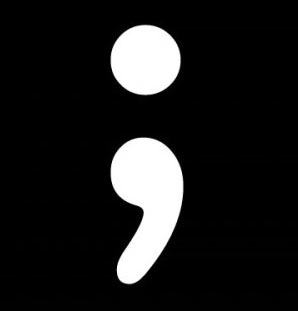
An interesting chart! Are semicolons becoming obsolete? (And, I’m almost afraid to ask: If they are becoming obsolete, what does this say about us?) Tell us what you think!
I’ll get the conversation started–I’m afraid that if we’re using fewer semicolons, it’s because we’re expressing–and having–less complex ideas. Specifically, I’m afraid that we’re thinking in sound bites, rather than in logical, sequential patterns.
At this time last year, my neighborhood was abuzz with the busy lives of the cicadas.
This year, June is quiet, and I miss the constant hum and chirp.
As I reminisce about last year’s infestation and look forward to the next one (16 years from now), I’d like to share with you this poem I wrote in honor of these little creatures on June 17 of last year: the day they disappeared.
Ode to Cicadas
I awakened to silence today;
no more buzz-saw, rhythmic mating call outside my window.
“Why search for the brashest, most obnoxious mate?”
I wanted to ask the females so many times, “Insist on higher virtues!”
But amid the din, they wouldn’t have heard me,
nor would they have cared.
With only a few short weeks to live, they rushed to quick judgment and acted on impulse.
While milky mocha exoskeletons remain on tree trunks, leaves, and bannister,
like so many freckles dotting fair summer skin,
the lively beings they encased are gone,
leaving their progeny as eggs, soon nymphs,
ensconced in the ground.
When I was sixteen, I encountered my first cicada brood.
A swarm of Biblical proportions, they covered my world;
they flew beside me as I walked to and from school,
lighting on my teal L.L. Bean Deluxe Backpack
and getting caught in my friends’ hair.
I laughed and helped to disentangle and free the creatures
so they could live their short lives.
I imagined the cicadas were surprised and alarmed at the stir they caused,
themselves having emerged from the earth only days before.
I tried to envision what my life would be like the next time the cicadas came.
2013.
I would be old then.
An adult.
I would no longer carry a backpack or a binder,
or walk to and from school.
Would I still enjoy catching and holding cicadas?
Would others still cringe at the thought of them?
How could I stand the suspense of waiting
another lifetime to see them again?
Now, the only colorful remnants
of the magicicadas
are their shimmering wings,
scores littering the ground and a few tracked into the house
on the paws of my unsuspecting dog:
my dog who, last week, like a Hungry Hungry Hippo,
snapped and gobbled them from the garage wall.
A short diversion in the dog’s life:
the cicadas will not appear for him again this year, as he might expect,
or next year—
he probably will not live to see another brood.
My last dog never got to see them at all; he was born too late and died too soon.
But do dreams of cicadas inhabit the collective unconscious of dogs?
When they swat and snap, and gulp and yelp,
are they running among cicadas in their dreams?
Seventeen years ago,
I never dreamed that I would this year watch
my Facebook friends’ children’s reactions to the infestation.
Some are old enough to know that their Homoptera friends
will not be with them again next year.
The nymphs will grow up with them: parallel but separate existences.
When they are quite grown up, children and cicadas, they will meet again
—but with wonder or annoyance?
As day lilies and lightning bugs overtake cicadas’ place in my imagination,
as they will for the next sixteen summers,
I wonder what life holds for me, for us all, while the nymphs mature.
Whatever our age, we, too, will mature along with the nymphs,
developing and shedding exoskeletons.
And our dreams,
like the shining iridescence of cicada wings,
will herald us, and we will leave them behind:
fragile yet lasting,
a reminder of what has come before
and a promise of what is yet to come.
Following up on yesterday’s post… SLOWING DOWN + writing by hand = increased analysis and synthesis = more effective learning
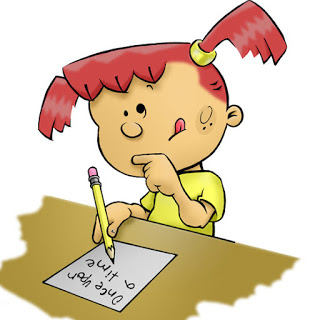
I have long maintained the importance of writing—by hand. I fully realize that today, typing is necessary—it is nearly impossible to communicate digitally in handwriting.
But I remember learning in a psychology course in college that repetitive fine motions, just as linguistic sounds, influence and create new neural pathways in children. It only stands to reason that these neural pathways persist into adulthood.
Take, for example, the Khoisan languages spoken in southern Africa. This language family relies on consonant and vowel sounds with which we’re familiar, as well as on a series of click sounds. It’s one of the least-studied language families in the world, probably for this reason: if a child is not exposed to the unique series of clicking sounds before reaching adulthood (or even the early teen years), he or she will be unable to develop the neural pathways to distinguish those sounds from one another. If this isn’t an argument in favor of varied sensory stimulation for young children, I don’t know what is.
Yet our heavy reliance on typing (on tablets, laptops, desktops, and cell phones) is putting children at risk of failing to fully develop the neural pathways that handwriting helps to create. Who can deny that the writing of an “s” is lingering and luxurious, as is the sound, while the quick crossing motion of a “t” is curt and chopped? However, if we type these letters or any of the 24 others, they all feel the same. And we haven’t even considered the felt effect of combining letters and words.
I do A LOT of typing—probably more than many people do. However, when I need to write anything that requires an iota of creativity, my composition begins with pen and paper. I also force (is that too harsh?) my students to physically pre-write before beginning drafts of papers. It helps to calm them, allows them to diagram their ideas, and gives them an organic connection to what they’re writing.
Today, I read with great interest this article in the New York Times. I think that you’ll appreciate it. It will make you stop and think about all we might be losing when we turn to typing.
I’m so honored that The Graceful Grammarian’s blog was mentioned in Coach Mike Tully’s blog, Total Game Plan, today! Total Game Plan is geared toward athletes and toward all running the race of life. Much of his advice and inspiration is related to self-efficacy, and we all can certainly use the type of positivity he shares!
Check it out—I think you’ll like it!

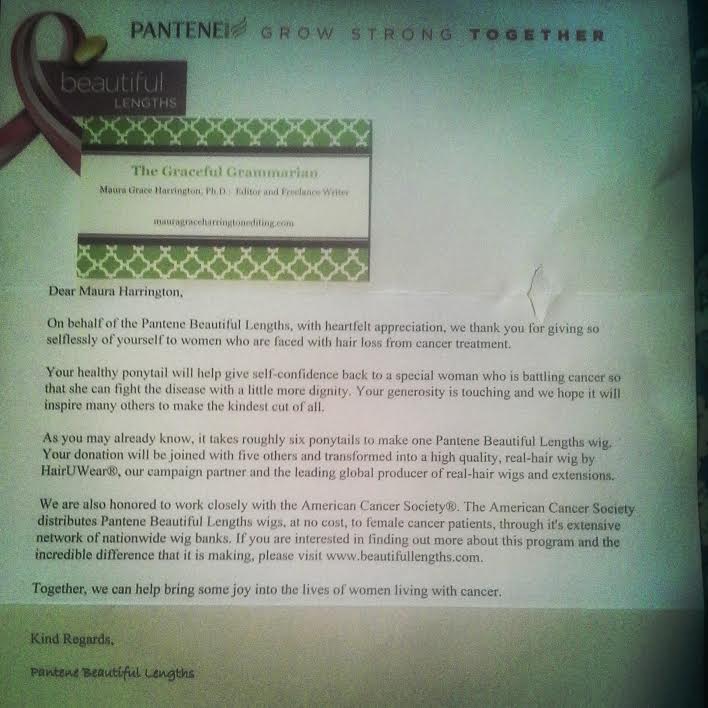
Receiving this letter today put a smile on my face. (Also, I hereby officially volunteer to edit the acknowledgement letters to Pantene Beautiful Lengths ponytail donors.)
As you prepare for your Memorial Day weekend travels, here’s an important caveat: grammatically incorrect t-shirts abound at NJ rest stops. I found this one at the Grover Cleveland rest area on the Turnpike three years ago.
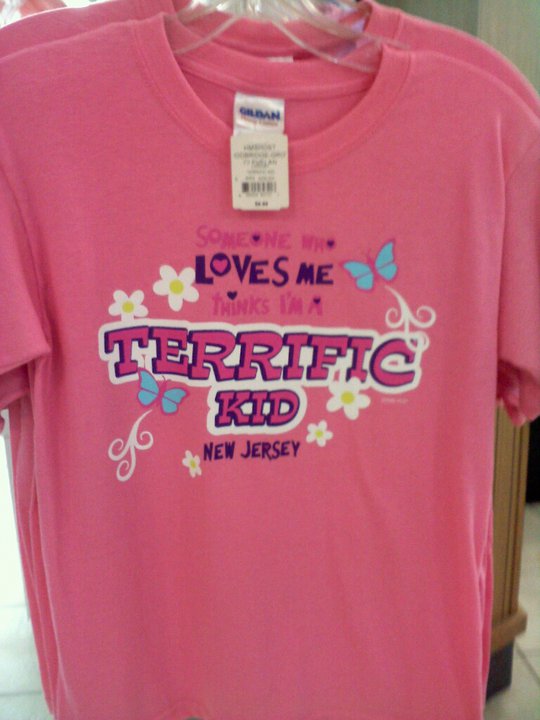
Can anyone explain to me what the text on this shirt actually means?
I didn’t think so.
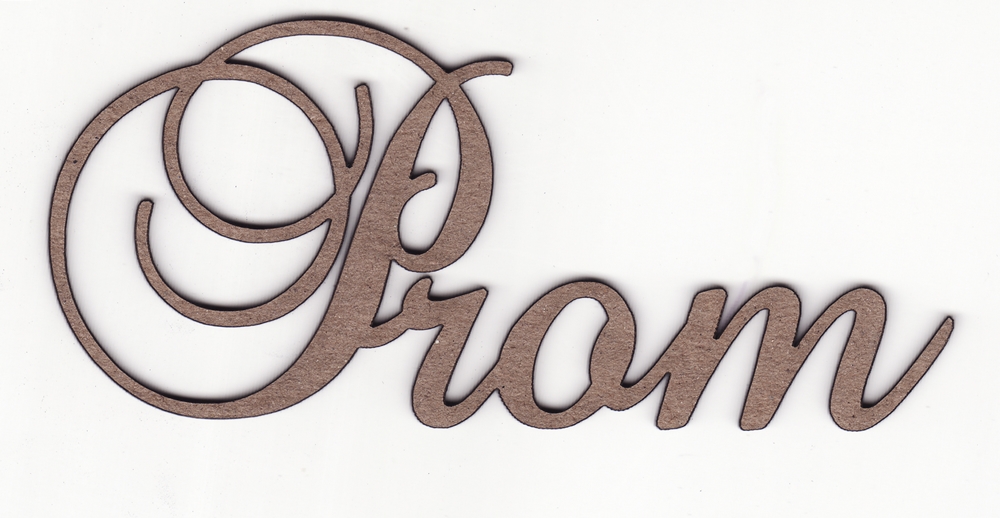
When I was in high school, no one I knew went “to prom”; we all went “to the prom.” It’s a subtle difference, but to me, it’s a big deal.
Until a few years ago, I never heard of anyone going “to prom.” But then, before class started a few times around 2009 or so, I heard some of my students talking about when they went “to prom.” To top it all off, I noticed that Axl on ABC’s “The Middle” went “to prom,” rather than “to the prom.” Something is rotten at the high school dance.
It never even occurred to me that “prom,” when used as a noun, would lack an article or a possessive pronoun. It just can’t be on its own. When I hear someone say “I’m going to prom,” it sounds to me as though the person is saying “I’m going to dance.” Of course, this is fine if the person is planning to dance (verb); a person can also promenade (verb). However, in all contexts in which I’ve heard “to prom,” it sounds distinctly like a preposition/noun combination, rather than like an infinitive verb.
Since this has been bothering me so much, I took my search to the Oxford English Dictionary.
There, I found the definition of “prom” referring to a dance is this: “A ball or formal dance at a school or college, typically held for the members of a single (typically senior) class near the end of the school year.” And there is NO verb form of “prom”; it is only a noun (not a verb), according to the OED.
However, I found some additional interesting information in the usage section of the “prom” entry: in each instance in which “prom” is cited in the singular from 1879 (when the usage of this colloquial term is first noted in English) through 1972, it is preceded by “the.” However, in the 2001 usage cited in R.B. Parker’s Death in Paradise, the sentence that the OED quotes is this: “I needed a date for senior prom.”
Where did “the” go?
WHERE???
Does anyone know why this happened, or how? Is “the prom” still acceptable, or am I showing that I’m a linguistic dinosaur every time I say “the prom”?
I know that this is a subtle change in English usage, but it’s been bothering me for quite some time. Let’s talk about it!
I recently came across this short article in Time: a great reminder to dot i’s and cross t’s, with respect to vocabulary.
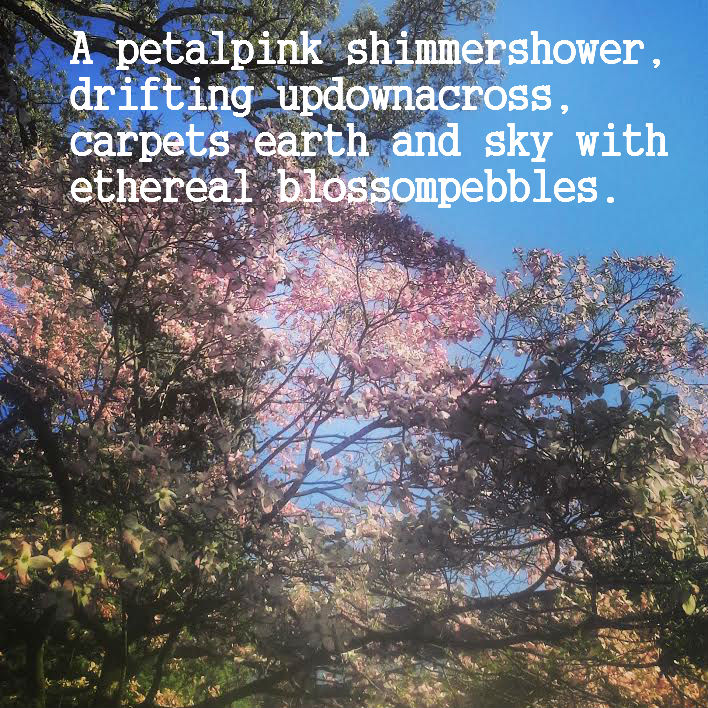
(In other words, petals are falling from the crabapple tree. And when the Graceful Grammarian sees this happening, she writes a short poem about it!)
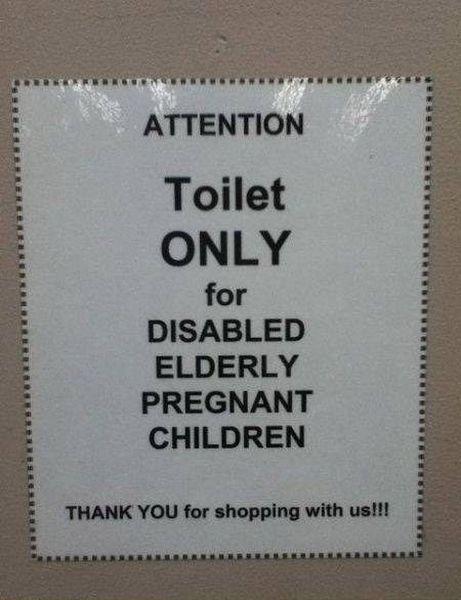
You can be assured that I did not encounter this sign in hard copy. Had I done so, I would have whipped out my Sharpie and inserted the essential punctuation!
 The Graceful Grammarian