
One of my favorite quotes from one of my favorite (Irish) plays:
“[I]t is not the literal past, the ‘facts’ of history, that shape us, but images of the past embodied in language.”
-Brian Friel, Translations
Speak and write carefully: your words are powerful, and they could become history!
I (Maura Grace Harrington) am not only the Graceful Grammarian—oh, no, my identity has more facets than two! I am also the Graceful Gael…or maybe the Galloping Gael…or maybe Gaelic Girl. Anyway, what this boils down to is: I’m a proud Hibernophile. Most of my graduate work focused on Irish literature, and I enjoy being involved in Irish events and organizations.
As you can imagine, March (a.k.a. St. Patrick’s Month) is a very busy time of year for me. And since so many of my Irish pursuits come to the fore during March, I feel that I must warn you that you might see the Graceful Grammarian post about some of the exploits of…Gaelic Girl. Don’t worry—I’ll be sure that any Irish-themed post has some connection to writing or language!
I know that a few days ago, I gave you a St. Patrick’s Day gift: a link to my St. Patrick’s Day column from The Catholic Advocate.
Today, in gratitude for your anticipated patience with me as I continue in Gaelic Girl mode for the next couple of weeks, I’d like to give you a two-fold gift. (Mind you, this two-fold gift includes just a hint of self-promotion.)
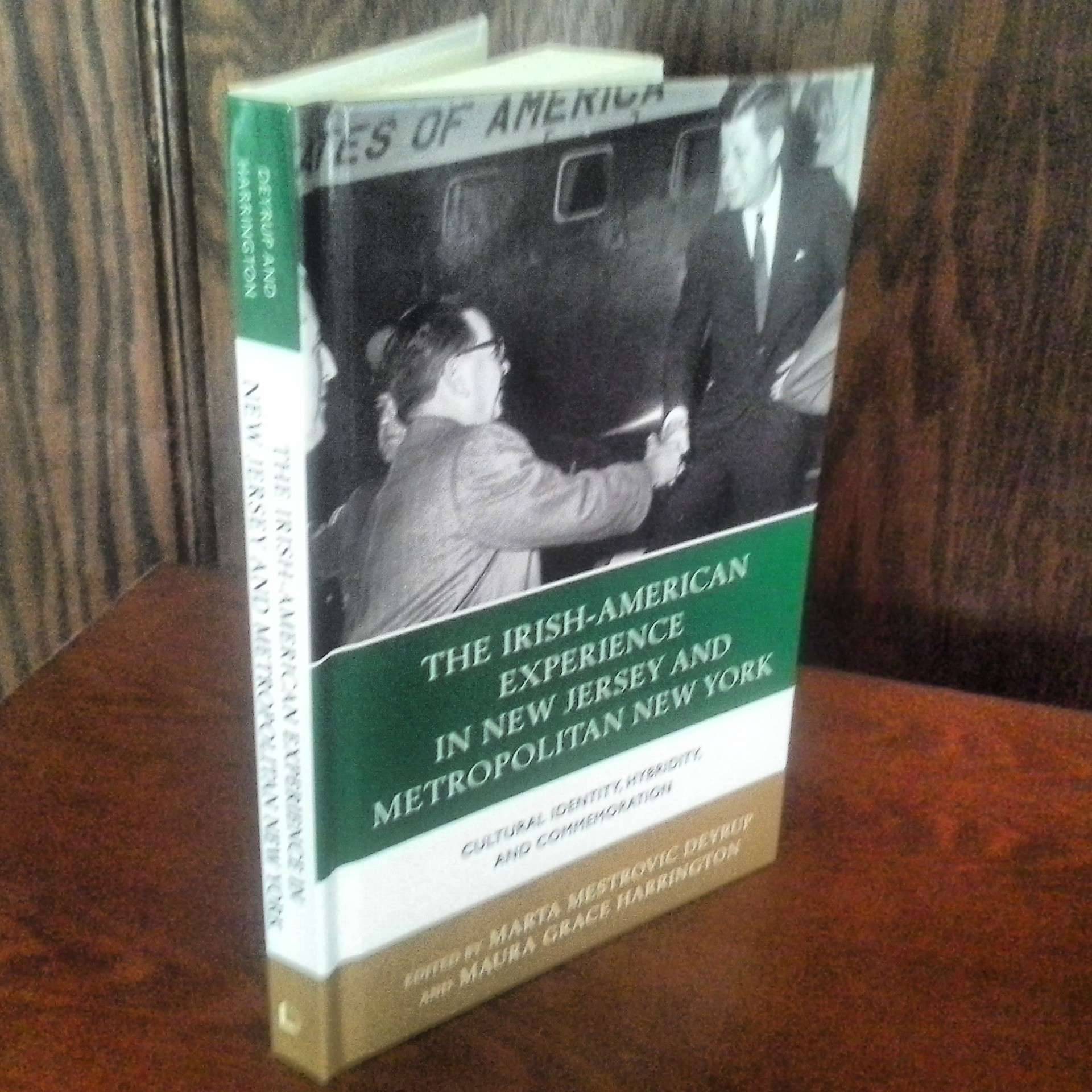
In December 2013, my colleague Marta Deyrup and I were thrilled to have our edited collection, The Irish-American Experience in New Jersey and Metropolitan New York: Cultural Identity, Hybridity, and Commemoration, published by Lexington Books. Marta and I were fortunate to enlist some truly outstanding scholars of Irish America to write chapters for our book.
While I would LOVE to be able to send a copy to each of you, that is, unfortunately, beyond the realm of possibility at this time. However, the writing in the book is so good, and the content is so interesting, that the least I can do is share the link to the Google Books preview so that you can enjoy a few of the excellently-written sample chapters that are available online. This preview is St. Patrick’s day gift number 2, from me to you.
If you like the preview, you’ll just adore the whole book! So, here comes gift number 3: the discount code! If you order the book here, you can use discount code LEX30AUTH14 for a 30% discount. This is the author discount—the same discount that Marta and I get when we purchase additional copies of the book.
So, Happy St. Patrick’s Month! If I think of any other gifts to share, I most certainly will do so. In the meantime, thanks for your patience with The Graceful Grammarian/Graceful, Galloping Gaelic Girl!
Good evening, word lovers! Did you catch tonight’s Final Jeopardy?
The eyebrow-raising category: Four-Letter Words
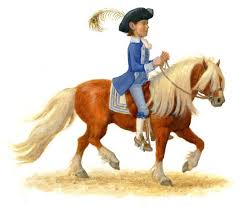
The Question: “New research shows that this word that has become ubiquitous dates back to young men also called ‘macaronis’.”
The answer:
Wait, let me give you a clue first…
Did you get it?
It’s “dude”: a derivative of “Doodle!” Who knew!
This is really a funny coincidence, as the word “Doodle” has been on my mind today. I created a Doodle calendar for my students, so that they could arrange conferences with me. And as I did so, all I could do was think of Doodle in “The Scarlet Ibis.” As a result, creating the Doodle calendar practically made me tear up!
Anyway, how fascinating that a “cool” term for guys comes from “Doodle.” I think I’ll giggle every time I hear “dude” from now on.
And from now on, I propose that we call each of the dudes in our lives “Doodle.” Who’s with me?

While my students and I were discussing Johann Wolfgang von Goethe’s Faust today, this quote from the play jumped out at me. Originally written in German, it loses nothing in translation. (At least I don’t think it loses anything—but I don’t know German!)
Note the parallel structures, balance, and complete thought in a succinct sentence. These elements of form allow us the freedom to enjoy the profound content.
“A man sees in the world what he carries in his heart.”
Wow. Challenge accepted.

In my neck of the woods, St. Patrick’s Month is in full swing. Parades have begun, the rush of Irish events is keeping all calendars full, and yes, the Harrington house is decked out for the big day.
Since St. Patrick’s Day is only two weeks away, I’d like to share with you an article about the legacy of St. Patrick’s spirituality in 20th century Irish poetry The Catholic Advocate in 2012. I know that it’s not specifically about writing, but it’s something that I wrote—so I hope that you don’t mind seeing it from the Graceful Grammarian. It’s my early St. Patrick’s Day gift to you.
Enjoy and share!
“Deciphering Poetry and Legacy that Traces Life of St. Patrick.”
Who would expect a young man who had not completed his education, was kidnapped by pirates, enslaved, and forced into years of servitude in a foreign and barbaric land to lead the charge in evangelizing a fiery people living on the edge of the known world? As St. Patrick would learn, and as he teaches us, God is full of surprises, and one of the lasting legacies of St. Patrick in our faith is to expect and gratefully welcome the unexpected as opportunities for us to be more fully human.
The man we now know as St. Patrick never dreamed that evangelizing the Irish would be his mission, but, when prompted, he undertook it with great zeal. Much of the little we know about the life of St. Patrick comes to us through his Confessio, one of his only two extant writings. Written to defend himself against charges (of what, we do not know), the Confessio tells us little about the events of St. Patrick’s life, but reveals much about his attitude of humility and awe. Certainly, while forced to herd sheep for years on the land of his slavemaster, the future St. Patrick had no designs on becoming one of the world’s best-loved saints; he must have been very concerned about surviving from day to day. Yet this time in solitude afforded him the chance to learn about God and about himself, and to appreciate life in a way that he never imagined. Instead of seeing his enslavement as a curse, St. Patrick welcomed his time to meditate, as it reawakened his Christian faith, which he had learned in childhood but had not yet fully taken as his own.
Further, his time to reflect heightened his awareness of what he called “the great acts of goodness and the great grace which the Lord generously gave me in the land of my captivity.” To St. Patrick, the mundane was anything but; all experiences, however quotidian, pointed him in the direction of God’s plan for him—and he listened. Seeing himself as “a stone that lies in deep mud” that God “raised…up and exalted…very high and placed…on top of the wall,” St. Patrick became attentive to the promptings of God in his life. For St. Patrick, this process was facilitated by God’s direct messages to him in dreams; from time to time, at crucial moments, God would let him know what to expect, and in what time frame. But more significantly, God’s addresses to St. Patrick not only reassured him but also challenged him, and motivated him to take action. They guided him on his escape from slavery and led him to return to Ireland to free the pre-Christian Irish from their enslavement to pagan beliefs.
While “The Breastplate of Saint Patrick,” one of the best-loved medieval Irish poems, was almost certainly not penned by the saint himself, it certainly is in his tradition of attending to and heeding the challenges issued by the transcendence of God in the visible world. Beginning most stanzas with “I arise today,” this poem reflects the call to action issued by our faith. The poem begins with theological reflections on God and articles of faith, and then a transition occurs. Upon brief reflection on the natural world: “light of Sun, brilliance of Moon, splendor of Fire, speed of Lightning, swiftness of Wind, depth of Sea, stability of Earth, firmness of Rock,” the persona (Patrick or the individual praying this prayer today) is emboldened to invoke the direct presence and participation of God in his own life, noting that he derives strength from God working to “pilot,” “guide,” “hear,” “guard,” protect,” and “secure” him. This sense of transcendent spirituality and the connection between the Trinity and the human experience comes through a reflection on the visible world: God surprises us through reaching us on our own level and bringing us to higher ground. Located between the pre-Christian Irish before him and the Christian Irish after him, St. Patrick is on a continuum of individuals who see not a wall between the natural and supernatural worlds, but a mist.
We could review tomes of poems, from “The Breastplate of St. Patrick” to today’s literature, in which we see the tradition of St. Patrick brought to life, again and again. Finding God in the unexpected, God’s promise giving hope, and the concept of retreat to make the unfamiliar familiar and vice versa figure prominently in Irish poetry and thought, and doubtless they sustained the Irish through years of hardship and uncertain temporal future. The fact that these themes have persisted through Irish literature of the modern period reveals the staying power of St. Patrick’s spirituality in the Irish imagination.
Two 20th-century Irish Catholic poets, Joseph Mary Plunkett and Patrick Kavanagh, demonstrate nicely the sacramental nature of the experience of the visible, hearable, tangible world, and the staying power of St. Patrick’s legacy of finding and appreciating God’s surprises for us.
Plunkett, a leader of the 1916 Easter Rising in Ireland, which touched off the War of Independence and led to a chain of events that established an Irish Republic (a seemingly very unlikely prospect after more than 700 years of foreign rule), was a sickly man who knew his days were numbered, even before he undertook his military maneuvers and was executed. His poems reveal great depth of emotion and his mystical spirituality, always connected to stimuli present to him in the natural world. For Plunkett, his love for Grace Gifford, whom he married in prison on the night prior to his execution, was a source of great inspiration, as were the wonders of the natural world. His most famous poem, “I See His Blood Upon the Rose,” reflects his self-imposed retreat upon his full experience of elements of nature, and provides him—and us—with an impetus to action. Cataloging natural things that reveal to him the presence and action of Christ, Plunkett mimics a common practice in love poetry. But this particular love poem, about agape, specifically, takes the reader by surprise right away with the unexpected take on the familiar image of the rose in a poem. The speaker sees echoes of the Passion, Death, and Resurrection of Christ everywhere he goes, to the point that he visualizes Christ’s blood when he sees a rose, “And in the stars the glory of his eyes.” While these are perhaps standard poetic images, the impetus behind the poem becomes stronger when the persona reveals that “carven by his power rocks are [Christ’s] written words.” The activity of God in the world and in human experience is highlighted in the image that “His strong heart stirs the ever-beating sea.” The pulse behind all movement in the world stems from God. Christ’s Passion, Death, and Resurrection have transformed Creation, to the extent that all elements of the visible world bear the indelible mark of the divine presence among us. How we respond to God’s personal message to each of us, revealed through our encounters with the everyday, is the challenge that both St. Patrick and Plunkett issue to us.
Writing during the mid-20th century, Patrick Kavanagh, a farmer by trade, further explored the Irish Catholic imagination in his poetry, reminding us in a rapidly secularizing world that Creation itself denies secularization, and that God’s surprises for us are around every corner. Using a refreshing mix of high poetic diction and simple, awe-inspired speech, Kavanagh begins his poem “The One”: “Green, blue, yellow and red – God is down in the swamps and marshes, / Sensational as April and almost incredible the flowering of our catharsis.” God’s presence springs forth from the unlikeliest of places; His renewing action is unfathomable and life-giving. And in Kavanagh’s schema, God’s outreach to us is not something that we should simply look at from afar; instead, it gives us life and cleanses us, allowing us to flower, in our new cleanness (catharsis): our rebirth. As St. Patrick experienced his conversion while, as a slave, tending sheep, in “The One” we read of God being present today in “A humble scene in a backward place / Where no one important ever looked.” In his reference in the poem to the “local farmers” who will be called out to witness God’s manifestation for them, Kavanagh emphasizes the humility tied to the appreciation “That beautiful, beautiful, beautiful God / Was breathing His love by a cut-away bog.” Even in an area in which the turf has been cut away, repeatedly, for generations, in order to create fuel, God regenerates life by means of his love, as demonstrated in the springtime of each year.
While we make the extraordinary ordinary by our lack of awareness and by our rushing through life, St. Patrick’s legacy invites us to take a step back: to appreciate the miracles that we witness every day. God is active in our world today, through the resiliency of nature, through our relationships with each other, and through the Sacraments; and He is active not so that we can merely admire him and move on with mundane existence, but so that He can call us into the action. As St. Patrick’s legacy teaches us, we should not limit ourselves by disbelief or worry about our inadequacy; instead, we should accept with gratitude God’s surprises for us.
As we honor the feast of this great saint with parades, family dinners, and other celebrations, let us keep in mind why we celebrate: because St. Patrick points us in the direction of Christ, whose Resurrection, which we will celebrate in just a few short weeks, is the greatest surprise gift of all.
I will never forget the day Professor Drabik, my Literary Types and Themes instructor at Caldwell College, announced to our class: “The mark of a truly good writer is that he or she can use the semicolon WELL.” I’m not quite sure why this particular sentence is so memorable, but it has stuck with me through 16 years! And I do my utmost to be sure that by the time they complete my Core English classes, my own freshmen know how to “use the semicolon well.” I guess I took Professor Drabik’s statement as a personal challenge.
In the interest of spreading semicolon wisdom, I’d like to share with you one of my favorite semicolon webpages. This one is both informative and…wait for it…FUN! Yes, FUN! You’ll see. Trust me.

Having just baked these scrumptious-looking granola muffins, a quote by Maya Angelou comes to mind: “Writing and cookery are just two different means of communication.”
I’ll chew on it while I sample the muffins!
Last year, in my travels around New Jersey, I encountered this monument to confectionary delight: a 7-foot-tall sprinkle machine! Imagine my glee!

It’s YOUR turn now! Give us a word or phrase to describe this contraption!
I recently came across this great article about the importance of considering how business email communications will be interpreted by the recipient. It includes some really helpful advice, which is especially useful on Monday mornings. Enjoy!

When I saw this sign outside one of my favorite local businesses, I was taken aback. I mean, this place sells THE most delicious maple walnut ice cream—if docs aren’t allowed, no more maple walnut ice cream for me!
But then I took a second look, and I realized that the real intention of the sign is to prevent dogs from entering. While canine fans of ice cream might find this decree very unjust, it is certainly more understandable.
I mention this in order to highlight the importance of proofreading. If we are writing, we are expressing ideas that we think are worthy of being understood. If our writing includes typographical mistakes, though, our audience can easily misconstrue our ideas. Why not take a little bit of extra time to ensure that we’re expressing our ideas as well as possible, sans silly mistakes?
Here are a few proofreading tips that I hope you’ll find helpful, and that I use in my own writing and revision. All of these tips are based on the primary principle of considering writing from a very important perspective: the audience’s.
• If it is at all possible, take a break between writing and proofreading. When what we’ve written is fresh in our minds, we are inclined to see the text as we intended it, rather than as it really is. After some time has elapsed, we might forget some of the details of the text: this will give us a more objective view of our writing on the second go-around.
• If you want to avoid disturbing others, proofread silently. Imagine someone whose use of English you admire reading the text to you. If that person would read the text as it is written, the text is probably in decent shape.
• If you are alone, or if you don’t mind seeming as though you’re talking to yourself, proofread aloud. Often, it is easier to hear mistakes than it is to see them.
• The BEST way to proofread is to avoid doing so alone! Ask someone to read your own work to you aloud. Your proofreading partner might notice mistakes as he or she is reading, and you will certainly hear mistakes as you hear them in your proofreading partner’s voice.
These proofreading tips can be used not only for proofreading but also for deeper revision. Please use them. Both you and your audience will be glad that you did.

Looking for something to do this weekend? Hie thee to Wisconsin for the International Tongue Twister Contest!
If you can say several tongue twisters in 10 seconds, you’ll be in the running to win a peck of pickled peppers, or perhaps even some seashells to sell by the seashore.
My favorite tongue twisters are of Seussian origin. Fox in Socks remains, to this day, one of my favorite books. Who can resist a retelling of the poignant vignette about Luke Luck and his licking duck?
“Luke Luck likes lakes.
Luke’s duck likes lakes.
Luke Luck licks lakes.
Luck’s duck licks lakes.
Duck takes licks in lakes Luke Luck likes.
Luke Luck takes licks in lakes duck likes.”
Do you have a favorite tongue twister? And, more importantly, can you actually say it without twisting your tongue?
 The Graceful Grammarian